
A lot of people think that if you do 3 to 4 clients a day, you’ll automatically make five figures a month. Then they count what’s left at the end of the week and can’t figure out where it all went.
Let’s break it down:
- How much does a lash artist really earn?
- How do you count profit, not just “revenue”?
- And why does someone charging $120 do well while someone at $180 is constantly in the red?
Why artists often don’t earn, even when fully booked
You can take 3 to 4 clients a day and still be constantly exhausted, unable to save, and unclear where “your” money is. And it’s all because you’re not counting right. You count only revenue: “Oh, $400 came in today, not bad.”
But you don’t count materials, disposables, rent (including utilities if you pay them separately), taxes, advertising, and depreciation (lamps, couch, equipment).
And another thing: many people spend a ton on marketing but can’t measure the return. You spent $200 on ads and got 5 clients at $100. Looks good. But if you count everything honestly, you went into the red.
The cost of a lash set
If you don’t count your cost per service, you don’t even know whether working at your own prices is worth it. And you don’t know whether you can afford to invest in ads, run promos, or rent a studio.
And don’t forget: your time is worth money too. If you work 2 hours for $120 but only $20 actually stays in your pocket, you’re not an artist, you’re a volunteer.
What a lash artist earns in practice
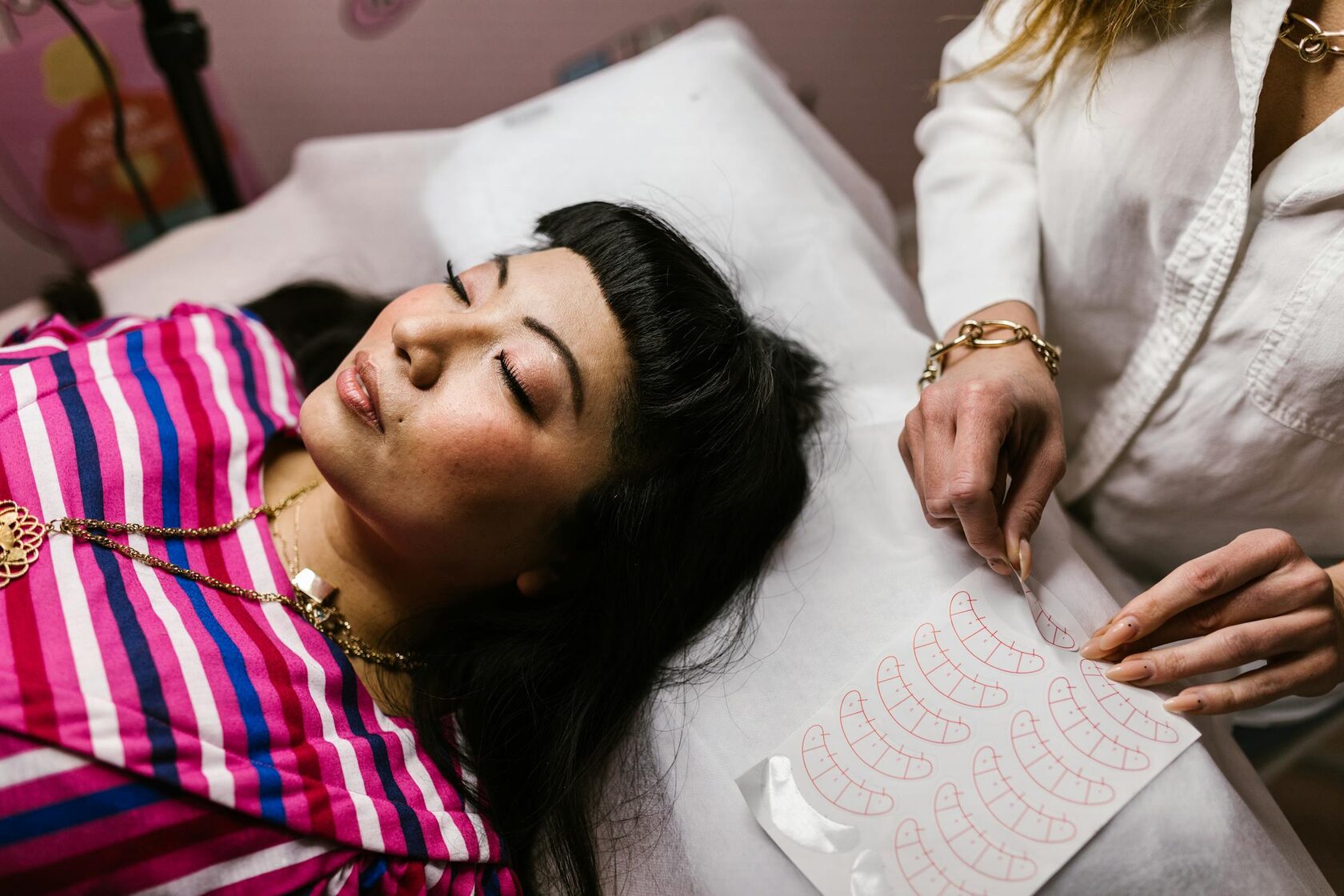
There won’t be any promises of “$20K a month on lashes” here, the kind people love to write to lure you into a course. There’ll be a real breakdown: how much you can earn depending on your level, experience, prices, and client flow. (Note: these are illustrative ranges; actual numbers vary a lot by region and market.)
1. Beginner (working from home, $75 to 120 a set)
Usually these are women who just finished training with no real grasp of how to market and position themselves. They work from home, often for people they know, through local listings and “open slot” posts on social media. The flow is unstable, and some clients are practice models or promo bookings.
Average load: 1 to 2 clients a day, about 18 to 20 working days a month. Gross revenue: roughly $1,500 to $4,000 a month. Out of that come materials, disposables, and, if you run ads, that too.
What’s left, on average: about $900 to $2,500. Sometimes less if you’re doing a lot of free sets for your portfolio.
Upside: you’re learning, growing, gaining real experience. Downside: you can’t sustain this mode for long, because the workload is already there but the money really isn’t. So you need to learn to find clients and position yourself so people choose you specifically.
2. Experienced artist (steady flow, $150 to 200 a set)
This isn’t a beginner anymore. There’s a client base, people come by referral, you know how to communicate, you understand marketing basics, and you have a basic portfolio. At this stage artists often rent a room.
Real load: 2 to 3 clients a day, 20 to 22 working days a month. Revenue: roughly $6,500 to $13,000 a month. Cost per service around $10. Plus rent (say, $600 to $1,600 a month), taxes (set aside for self-employment tax, usually 15%+), and money into materials and ads. Net take-home lands around $3,500 to $8,000, which is already nice.
There’s plenty to work with here: you can raise prices, expand your services (add trendy effects at a separate price, for example), build a personal brand, and get better at marketing and ads to grow your client count.
3. Advanced artist ($250+ a set, strong portfolio, your own audience)
These are artists with their own audience, loyal clients who reliably refer them, steady word of mouth, an authentic portfolio, and a built-out marketing strategy and strong positioning. Here you’re not just an artist but a small personal brand.
You always do the sets you personally love, because clients trust you and share your taste. What’s more, they want only you, and often travel from other neighborhoods. At this stage artists usually rent their own room or even a studio.
Load: 3 to 4 clients a day, 20 to 22 days a month. Revenue: roughly $15,000 to $30,000. Sometimes more if you have quick services (fills, express sets, lash lifts) and trendy effects at a separate price.
Cost per service is higher here, because you add extra marketing spend (quality photos and video of your work, investing in your own marketing knowledge), but it’s absolutely worth it. Margins are high, and a solid amount can stay in your pocket.
At this level you can work less but earn more, thanks to your name and the trust behind it.
Work for yourself or as a salon employee, where’s the money?
If you work as a salon employee, the setup is usually:
- they give you clients, a space, and materials
- you get a percentage or a flat rate per service
- and you don’t have to deal with ads, shoots, purchasing, or finding and booking clients.
Sounds convenient. But what about the money? An example:
The salon charges the client $150. You’re paid 30 to 40%. So you get:
- $45 to $60 per service
- at 3 clients a day, up to $180 a day
- per month: $180 × 22 days = about $4,000.
You don’t subtract anything from that (except taxes); it’s already your “net” income. But it’s capped. The salon gives you clients, and you don’t influence how many, you can’t raise prices, you don’t choose your clients, and sometimes you have to work with very unpleasant people you can’t turn away.
Now compare that to working for yourself: same $150 price, 2 to 3 clients a day, 22 days a month. Revenue: $6,600 to $9,900. Say 40% goes to materials, rent, taxes, and marketing. Net take-home: about $4,000 to $6,000 a month.
On the face of it, roughly the same, except you also have to handle client acquisition and booking.
But at the same time:
- you manage your own time
- you can grow your prices
- you can build a client base of people you enjoy working with
- and you build your own name instead of just “working for someone.”
Working at a salon is convenient at the start, for experience, speed, and your first clients. But if you want freedom, growth, and money, your own brand pays off many times over down the line.
What really drives a lash artist’s income (and it’s not just your prices)
Many people think: I’ll raise my price and earn more. But if your positioning around it isn’t built, you’ll just end up without clients. Money in this profession comes not only for lashes but for the system you build around your work.
Here are the key factors that really affect your income:
1. How well you count. If you don’t know your cost per service and don’t account for ads, rent, disposables, and taxes, you don’t control the business. Even with high prices, you can earn less than a beginner. Learn to count profit step by step so you see what’s actually left for you, not just “what hit the account.”
2. Client flow. Income is always the result of traffic. Steady bookings = steady income, and vice versa. Some get clients through a map pin and referrals, others through social media and ads. It doesn’t matter where from. What matters is that you can manage that flow. And that has to be built: visuals, stories, portfolio, trust.
3. Visuals and packaging. A strong portfolio isn’t just pretty. It’s a tool that makes clients come to you not “for a discount” but because they want you specifically. Portfolio, positioning, marketing, all of it either raises your average ticket or kills it.
4. Communication and service. It sounds obvious, but clients come back not for the curl but for how they feel after the appointment. If you’re easy to be around, if you know what to say and how to carry yourself, that keeps a client. Regulars are the foundation of income. Without them, you’re forever chasing new clients and burning out.
5. The ability to grow. Some people do the same thing for years and complain that “nothing changes.” Others add new services, raise their ticket, launch training or courses, move into a studio format, or start selling their own materials. Growth isn’t instant. But if you don’t build a strategy, you don’t grow.
You might also like

Download a Client Lash Aftercare Card
Free Guide: The Best Angles for Lash Photos

How to Start a Fight by Photographing Your Client

How to Deal With Difficult Clients: A Psychologist’s Tips

Negative Reviews: How to Respond

Your Salon’s Instagram Profile: From the Basics to the Details

How to Win Back Clients

How Can a Lash Artist Earn More?

Why Lash Extension Reviews Matter

5 Free Ways to Attract Clients for Lash Artists and Salons
How to Make a Beautiful Instagram as a Lash Artist
Where to Find Lash Extension Clients
The Secrets of Great Client Service for a Lash Studio

To Wait or Not? What to Do When a Client Is Late

10 Instagram Content Ideas for Lash Artists

A Lash Artist’s Portfolio That Sells

The 7 Best Apps for Editing Face and Eye Photos on Your Phone

Off-Limits Topics: What Not to Discuss With a Client

Burnout in Lash Artists

The Top 7 Ways to Advertise Your Lash Services