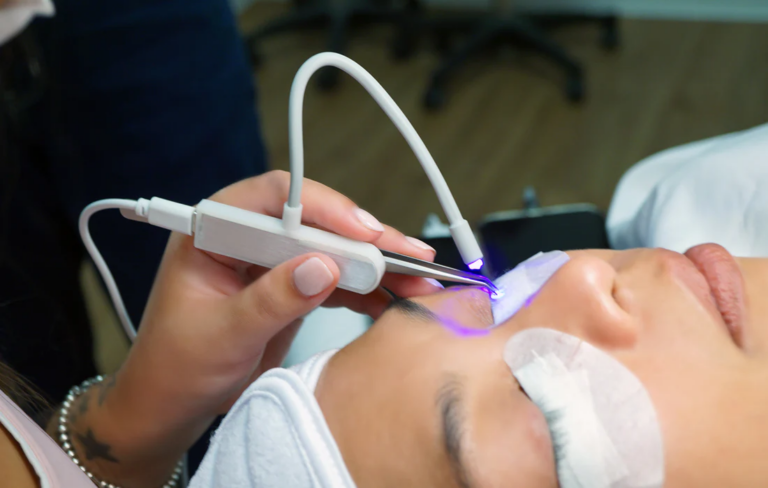
You’ve surely noticed: on one client the lashes hold perfectly for 5 weeks, on another they start shedding after 7 to 10 days. Same technique, same adhesive. What gives? One of the key factors is the porosity of the natural lashes. It directly affects your bond and how long a set holds.
Let’s break down the types of porosity, how to spot it, and most importantly, what to do about it.
What porosity is and why it matters
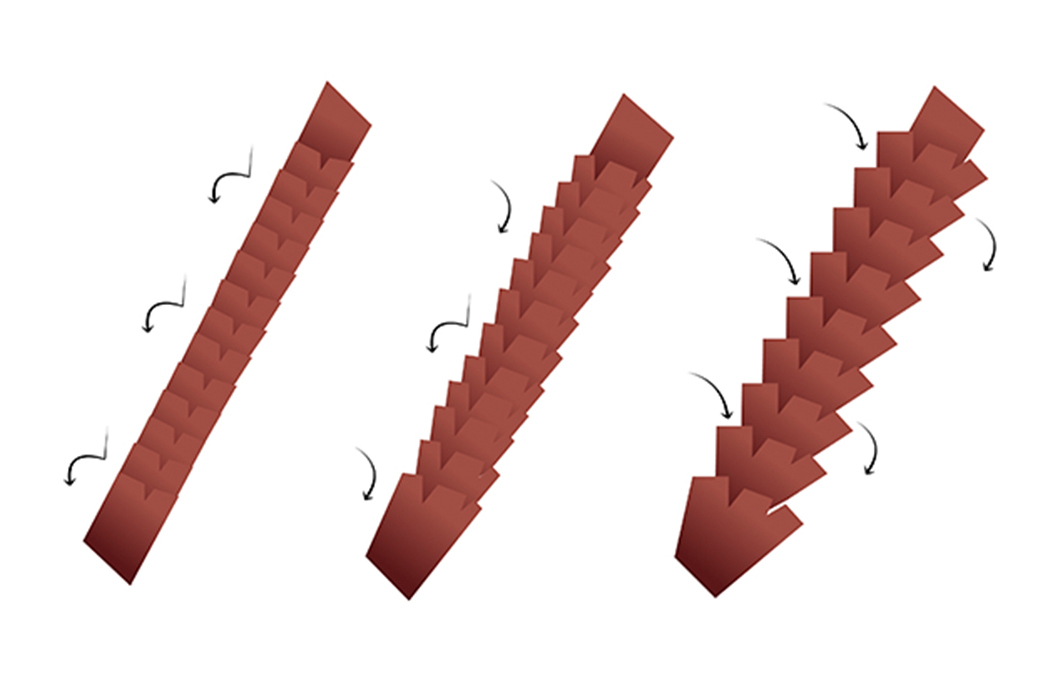
Porosity is the state of the lash hair’s surface. To simplify, picture a lash like roof shingles: the cuticle scales are either pressed flat or slightly lifted. How “open” those scales are determines how the lash absorbs moisture and adhesive.
Low porosity: the cuticle lies flat, the lash is smooth and reluctant to “absorb” products. Medium porosity: the sweet spot, where adhesive lays down evenly and the bond comes out strong. High porosity: the scales are open, the surface is rough, and adhesive “sinks in” and quickly loses its flexibility.
Lash adhesive is cyanoacrylate. It cures (polymerizes) on contact with moisture. Too little humidity and the bond forms slowly. Too much moisture, or high porosity, and curing goes chaotic and the bond turns brittle.
How to determine a client’s lash porosity
You don’t have a microscope, and you don’t need one. Here are working methods you can use right during the appointment:
1. Appearance. Smooth, shiny, dense lashes → low porosity. Matte, springy, without strong curves → medium. Dull, frizzy, wavy in spots → high.
2. How primer behaves. On a smooth lash, a drop of primer will “sit” without absorbing. On a porous one, it soaks in instantly, like you dripped it onto fabric.
3. How adhesive behaves. If the adhesive “grabs” right away, porosity is probably high. If the drop starts to “creep” and won’t set, it’s low.
The main thing: what to do with each porosity
If porosity is low. The problem: adhesive can’t grip the smooth surface. How it works: not enough moisture, so curing is slow; the drop can “float” and the bond is unstable. What to do: use a booster or an alkaline primer to slightly open the cuticle. Pick a fast-curing adhesive (1 second or less). Keep normal humidity in your room, no less than 45 to 50%. Tip: it’s better to apply a booster once and precisely than to over-wet and get the opposite effect, a loose, over-dried surface.
If porosity is high. The problem: adhesive sets fast, but from over-absorption it turns brittle, so the bond is unstable and can break down during wear. How it works: moisture and the adhesive itself “sink” into the hair, curing is disrupted, and the bond crumbles from within. What to do: don’t use alkaline primers or boosters; they only make it worse. Reduce the amount of adhesive on the lash. Choose a medium- or slow-curing adhesive so it doesn’t set instantly and has time to spread. Tip: if a client recently had a lash lift, a perm, or tints her lashes often, porosity will almost always be high.
If porosity is medium. The problem: none. This is the ideal. Tip: just enjoy the work. 😊
The takeaway: how knowing lash structure helps you
Understanding porosity isn’t abstract theory, it’s a real tool that helps you see why one client’s lashes hold perfectly while another’s shed. The better you read the structure of the natural lashes, the more precisely you match your adhesive, products, and humidity, and the more reliable your result.
If you want wear time to make both you and your client happy, factor in porosity at every appointment. It’s a skill that comes with practice, but it works for you every single day.
Happy lashing!
You might also like
Bottom Lash Extensions
Working the Inner and Outer Corners
Adaptive Lash Extensions: What They Really Are
The Mascara Effect in Lash Extensions
The Ombre Lash Technique and Shadow Effect
The Winged Eyeliner Lash Effect
Competition Lash Looks
Is Hypoallergenic Lash Adhesive a Marketing Myth?
The Top 5 Trending Lash Effects (With Maps)
How to Match Colored Lashes to Eye Color

Why You Can (and Should) Get Lash Extensions Wet

Working With the L Curl
How to Work With Baby Lashes (Anagen Stage)

Summer Lashing: How to Tame Your Adhesive in the Heat
The Wet Look Lash Effect

Colored and Creative Lash Extensions
Trending Effects: Anime, Kim, Kylie, Angel

Working With Lash Adhesive in Winter
“I Swear I Washed Them!” What to Do When Clients Ignore Aftercare