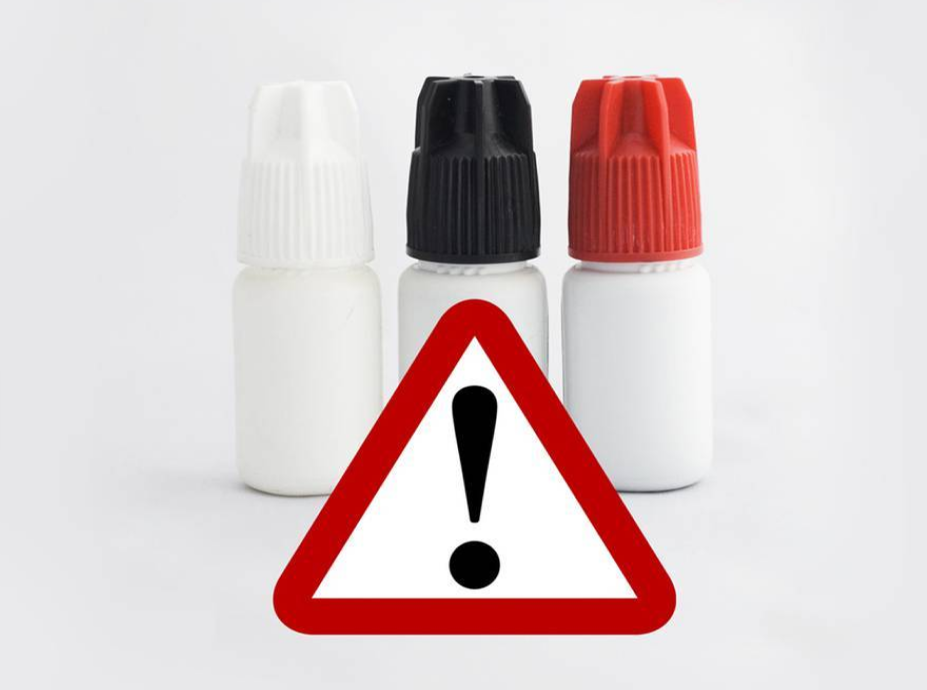
Adhesive is every lash artist’s headache. On top of being sensitive to storage and needing a specific temperature and humidity while you work, it can also trigger unpleasant reactions in the body.
The treatment itself is completely safe and painless, but roughly 1 client in 100 can leave the salon with more than pretty lashes: swelling, watering, redness, itching, and so on. Let’s take a close look at how to keep both the client and the artist from having an allergic reaction.
What’s the main cause of allergies?
Adhesives differ in a few ways: color (clear or black), cure speed (0.5, 1, or 2 seconds), and viscosity (runny or thicker). Despite those small differences, every single adhesive contains a substance called cyanoacrylate (90 to 97% of the total formula). It’s the same thing used in household super glues, just in even higher amounts. Cyanoacrylate, and specifically its fumes, is the most common cause of a reaction after a lash appointment.
Sometimes, though, the reaction isn’t from the cyanoacrylate but from the black pigment in the formula. In that case, try a clear adhesive.
So why do brands sell “hypoallergenic” adhesive?
There are plenty of so-called “hypoallergenic adhesives” on the market. According to the product descriptions, they don’t cause any allergic reaction at all. But that’s a myth.
Every adhesive contains the cyanoacrylate we already know about. The only difference is that hypoallergenic ones have a slightly lower concentration of it. But a lower dose of the allergen won’t prevent a possible reaction, while it does slow the cure speed and shorten wear. So the logical conclusion is that hypoallergenic adhesives don’t solve cyanoacrylate intolerance, and they hurt the quality of your work on top of it.
There are also different types of cyanoacrylate: ethyl, butyl, methyl, isobutyl, and alkoxy cyanoacrylate. Some are more aggressive and give off more fumes, some less, but the rule holds: the “gentler” an adhesive is on fumes, the slower it cures.
So if a client once had a reaction after a set, switching to a hypoallergenic adhesive next time won’t fix the problem.
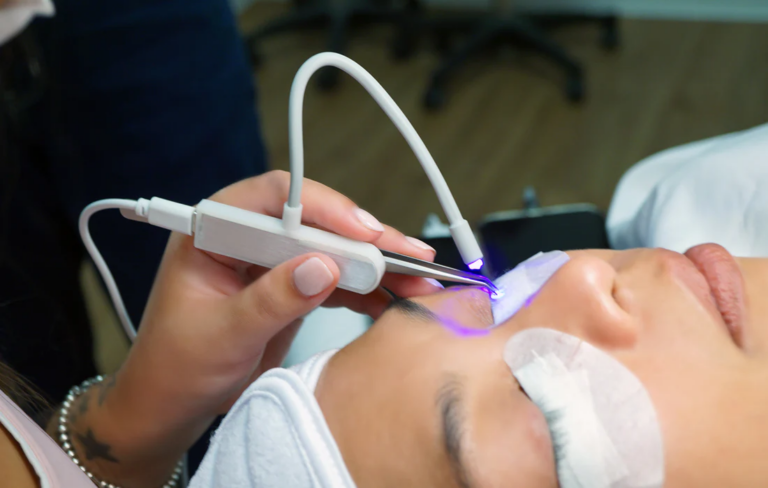
There’s also the option of LED lash extensions, where curing happens mostly through UV light, though a small amount of cyanoacrylate is still in the formula, so keep that in mind.
How can the artist develop an allergy?
Even though the artist doesn’t touch the adhesive directly during the appointment, they’re at even greater risk than the client, because they constantly breathe the fumes coming off it. All day long, several days in a row. That’s why many artists develop chronic, rhinitis-like symptoms: a constantly stuffy nose, sometimes trouble breathing, and sensitive eyes.
Keep in mind that even people who aren’t prone to this allergy can develop a reaction with long, regular exposure to the adhesive. That’s the so-called cumulative effect.
For how to prevent an allergy, read this article.
You might also like
The Top 5 Trending Lash Effects (With Maps)
The Winged Eyeliner Lash Effect
LED Lash Extensions: The Method, Pros, and Cons

Summer Lashing: How to Tame Your Adhesive in the Heat
Trending Effects: Anime, Kim, Kylie, Angel

Colored and Creative Lash Extensions

Working With Lash Adhesive in Winter

Why You Can (and Should) Get Lash Extensions Wet
Bottom Lash Extensions
Adaptive Lash Extensions: What They Really Are
“I Swear I Washed Them!” What to Do When Clients Ignore Aftercare
How to Work With Baby Lashes (Anagen Stage)
How to Match Colored Lashes to Eye Color
The Wet Look Lash Effect

Working With the L Curl
Lash Porosity and How It Affects Retention
Working the Inner and Outer Corners
The Ombre Lash Technique and Shadow Effect
Competition Lash Looks