Every lash artist knows the job is a heavy load on the eyes. You sit all day, staring at every single lash, straining, and by the end of the day your eyes are ready to log off. And we both know eyesight is fragile: easy to wreck, nearly impossible to bring back. So here are a few simple habits that help protect your eyes, so you can enjoy your work instead of suffering through the fatigue.

1. It starts with the right lamp
Light is your number one helper on the job. Get it wrong and your eyes tire fast.
What matters:
- The lamp should be bright, with a wide pool of light. Shadows on the lashes are a sign there isn’t enough light.
- Cool daylight (around 5000 to 6500K, so the light reads as natural) is ideal. It shows every lash clearly and puts far less strain on your eyes.
- If the light’s too dim, you’ll feel it right away. Shadows from your hands, the constant urge to nudge the lamp to light up your work zone, permanently tired eyes? Those are all signs you’re short on light. You want a lot of it, really a lot.
A good lamp isn’t a luxury, it’s a necessity. Skip the cheap ones you have to crank to max. A good lamp saves both your eyesight and your sanity.
2. Light the whole room
You know what’s sneaky? When your work zone is lit perfectly but everything around it is dark. It’s like staring at a streetlight at night: your eyes constantly readjust between bright light and gloom. The eye muscles overwork and you tire faster.
What to do? Get even light across the room. Add extra light sources or swap the central fixture for a stronger one. If you have windows, use the daylight, but remember it should supplement your artificial light, not be the only source.
3. Keep everything at one level
If your lash tile sits too low (say, at knee level) while you work on the client’s eyes, your eyes have to keep changing focus. That’s brutally tiring, and if you work that way for long, vision problems won’t be far behind.
Put your tile at the client’s eye level. It’s comfortable, and your eyes tire less.
Same goes for your adhesive drop. Ideally the surface for your adhesive sits right next to the tile. That’s also why we really don’t recommend a glue ring: on top of everything, you keep breathing those fumes as you bring it to your face.
A comfortable station isn’t a luxury, it’s a necessity. You’ll save a ton of energy when everything is within reach. And a lot of artists notice that the moment they tidy up their station, they get faster and more efficient, and their posture improves too.
4. Work through the lashes systematically
You know what kills your eyesight? Poking your tweezers all over the lash line hunting for that one “convenient” lash. You think you’re making it easier, but you’re making it harder:
- Your eyes tire from the constant motion.
- You waste more time.
- You lose focus, which is its own strain on the eyes.
Make it a rule to work in order. Don’t hunt for the “perfect” lash, just extend the one nearest to what you’ve already done. It cuts the chaos in your movements, helps you finish faster, and protects your eyes.
5. Don’t skip adhesive protection
And let’s not forget the adhesive. Its fumes can irritate your eyes, especially if you work without extraction.
Safety glasses are your friend, and you can grab a pair at any hardware store. Air out the room, and get an extractor fan if you can. That’s not just for your eyes, it’s for your overall health.
6. Do eye exercises
You’re not a robot, and your eyes need rest too. When you feel them getting tired, take a break and “stretch” them out. Here’s a list of simple but effective exercises:
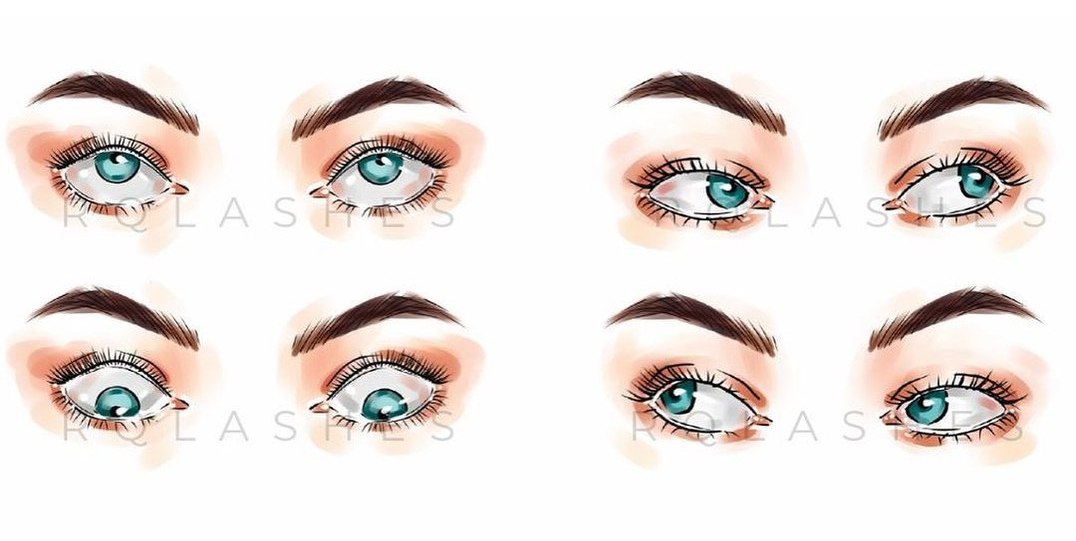
- Up-down-left-right. The simplest one, and it works. Keep your head still and level.
- Look up (to the ceiling), then imagine the movement continuing up through your forehead, straight up.
- Keeping your head level, look down, imagining your gaze continuing into your own throat.
- Look left, as if through your left ear.
- Look right, as if through your right ear.
- The figure eight. Picture a horizontal figure eight (an infinity sign) in front of you and slowly trace its outline with your eyes. First one way 5 to 10 times, then the same the other way. This strengthens the eye muscles and eases tension.
- Near-far focus. Hold a finger or a pen about 8 to 12 inches from your eyes. Focus on it for a few seconds, then shift to something in the distance (out the window, for example). Repeat 10 to 15 times. This trains your eyes to switch focal distance quickly.
- Circles. Close your eyes and slowly roll them in a circle: 5 times clockwise, then 5 counterclockwise. Then repeat with your eyes open. This relaxes the eye muscles and improves circulation.
- Blinking. Blink quickly for 30 seconds, then close your eyes and relax for 10. Repeat 2 to 3 times. This simple move re-wets the eyes, relieves dryness, and cuts fatigue.
- Dot on the glass. Stick a small dot (paper or a sticker) on your window. Stand 12 to 16 inches from it. Look at the dot for 10 seconds, then shift your gaze to something far outside. Repeat 10 times. Great for relaxing the eyes after close-up work.
- Palming. Warm your palms by rubbing them together, close your eyes, and cup your hands over them so all light is blocked. Relax and stay like that for 1 to 2 minutes. It releases tension and calms the eyes.
7. Cap your clients per day
This one’s simple: your eyes aren’t made of steel. Even in perfect conditions, overload will catch up with your vision. Long concentration on tiny details drains the eyes, and no lamp or stand will save you if you take on too many clients.
Figure out a comfortable number of clients per day. For example:
- 2 to 3 for beginners
- 4 to 5 for experienced artists (and even then, with breaks).
Always take pauses between clients: step out of the room, look into the distance, do your eye exercises. 5 minutes is enough to recover.
Remember, your eyesight is your main tool, you’re nowhere without it. These tips won’t work miracles if your vision has already started slipping, but if you stick to them you’ll cut your risk down the road, and you’ll get to work longer and love what you do without worrying about your health. Take care of yourself.
You might also like
Your Client’s Eyelids Keep Twitching: What to Do?
Why Do Eyes Get Red After Lash Extensions?
Why Volume Fans Fall Apart
Under-Eye Pads for Lash Extensions

Why Your Client’s Eyes Water, and Why It Matters
Men’s lash extensions: how to define the eyes and keep them masculine
The Best Lash Adhesive: How to Choose
The Main Lash Extension Effects
Why Do Lashes Tangle, Twist, or Droop?
How Often Should You Refresh the Adhesive Drop?
Mistakes When Cleansing Lashes Before Application
Lash Remover: Which Type to Choose
The Wispy Lash Effect
Common Lash Extension Mistakes
Everything About Brown Lash Extensions

Online Lash Training: The Pros and Cons
The Real History of False Lashes and Lash Extensions

How to Choose the Volume
How to Tame Lash Extension Glue: Top Artists Secrets
Lash Extension Volumes Explained
How to Set the Direction of the Lashes

How to Make Lash Extensions Last Longer
Disinfecting and Sterilizing Lash Tweezers
How Deep to Dip the Lash in Adhesive
The Cat Eye Lash Effect
Lash Primer, Cleanser, Accelerator, and Bonder: When You Need Them and How to Choose
Types of Lash Tweezer Sterilization Equipment
Remover Balls Up Into White Clumps: What to Do?
The Difference Between an Allergy and Irritation After Lash Extensions