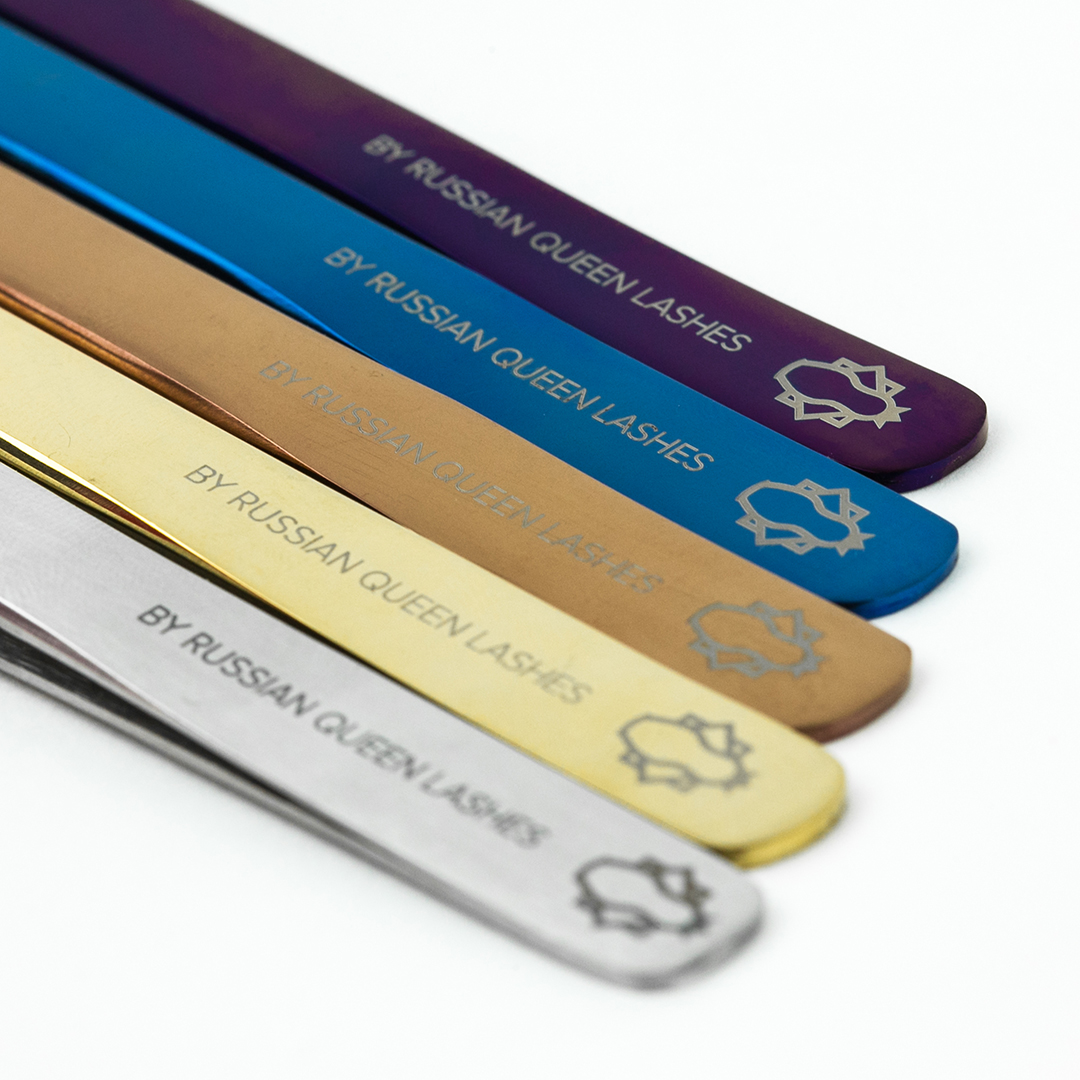
One of the most common questions, especially among beginners in lash extensions, is how to choose the perfect tweezers and how they differ from one another. Which tweezers are more comfortable, and which are better for classic versus volume sets?
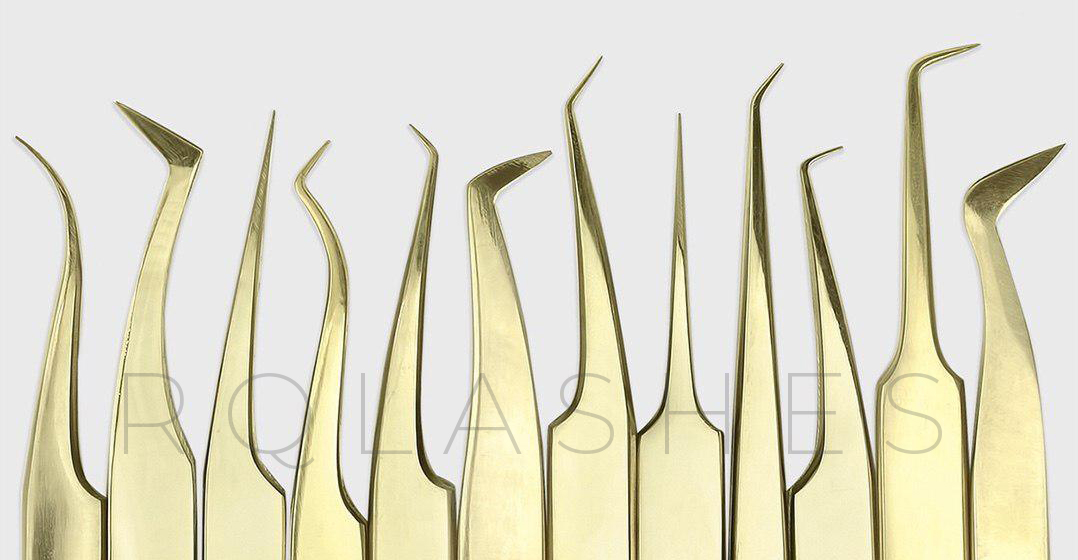
So, tweezers can differ by the following parameters:
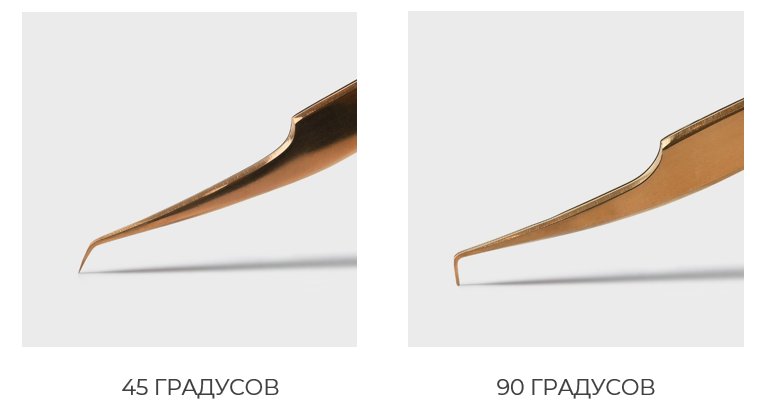
The angle (for example, 45 or 90 degrees)
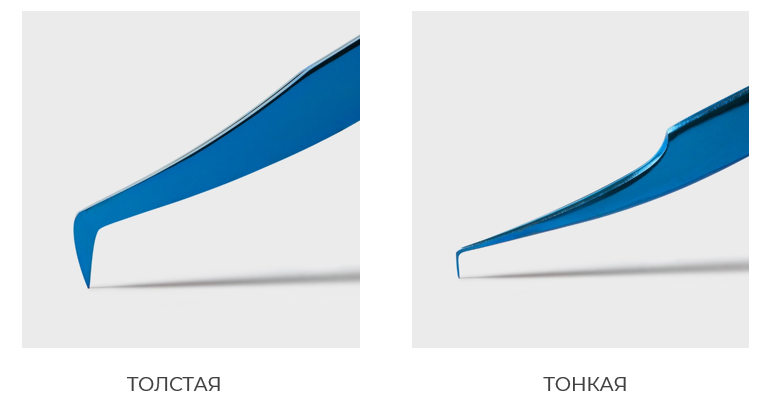
The tip thickness (thick or thin)
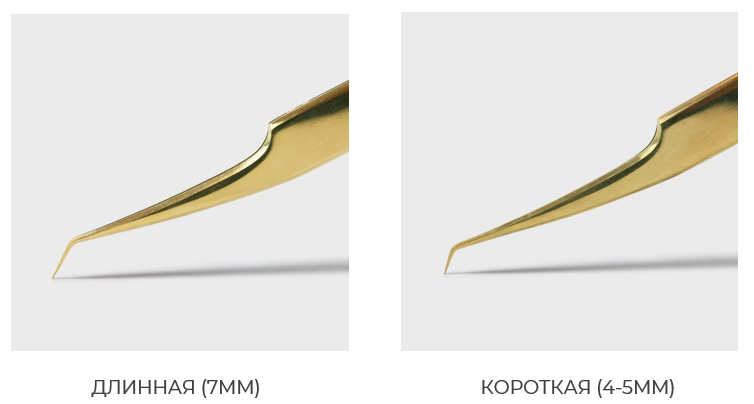
The tip length (7 mm is considered long, 4 to 5 mm short)
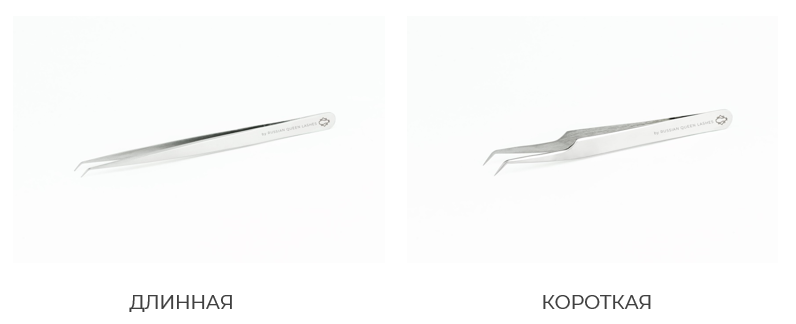
The handle length
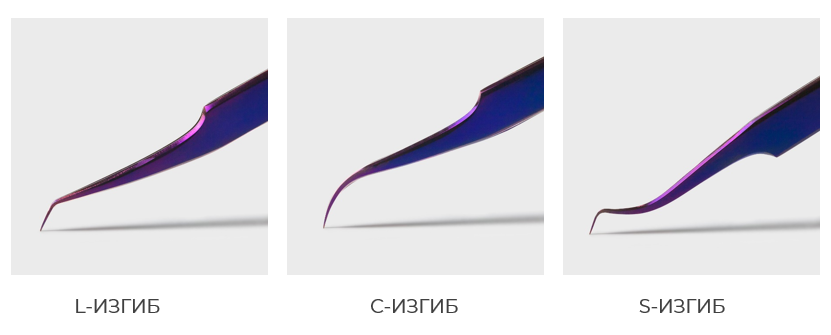
The bend (L-type, C-type, S-type)
The color and coating (up to the maker’s imagination)
The type of metal (there are 5 types on the market)
You’ll find the full classification of shapes and types with examples further down in this article.
How to choose lash tweezers
By hand! You can’t do it from a photo. If you already know the shape, size, and type of steel you need, then yes, you can order tweezers online. But if you’re still figuring it out and looking for your shape, try them in person!
Here’s what to look at when choosing your main working tool:
The tweezers should sit comfortably in your hand
They’re made of quality steel
They’re not heavy to hold
They’re not damaged, worn, or chipped
The grip zone sits in a spot that’s comfortable for you
You don’t need extra force to pick up lashes
It’s easy for you to pick up lashes and form a fan
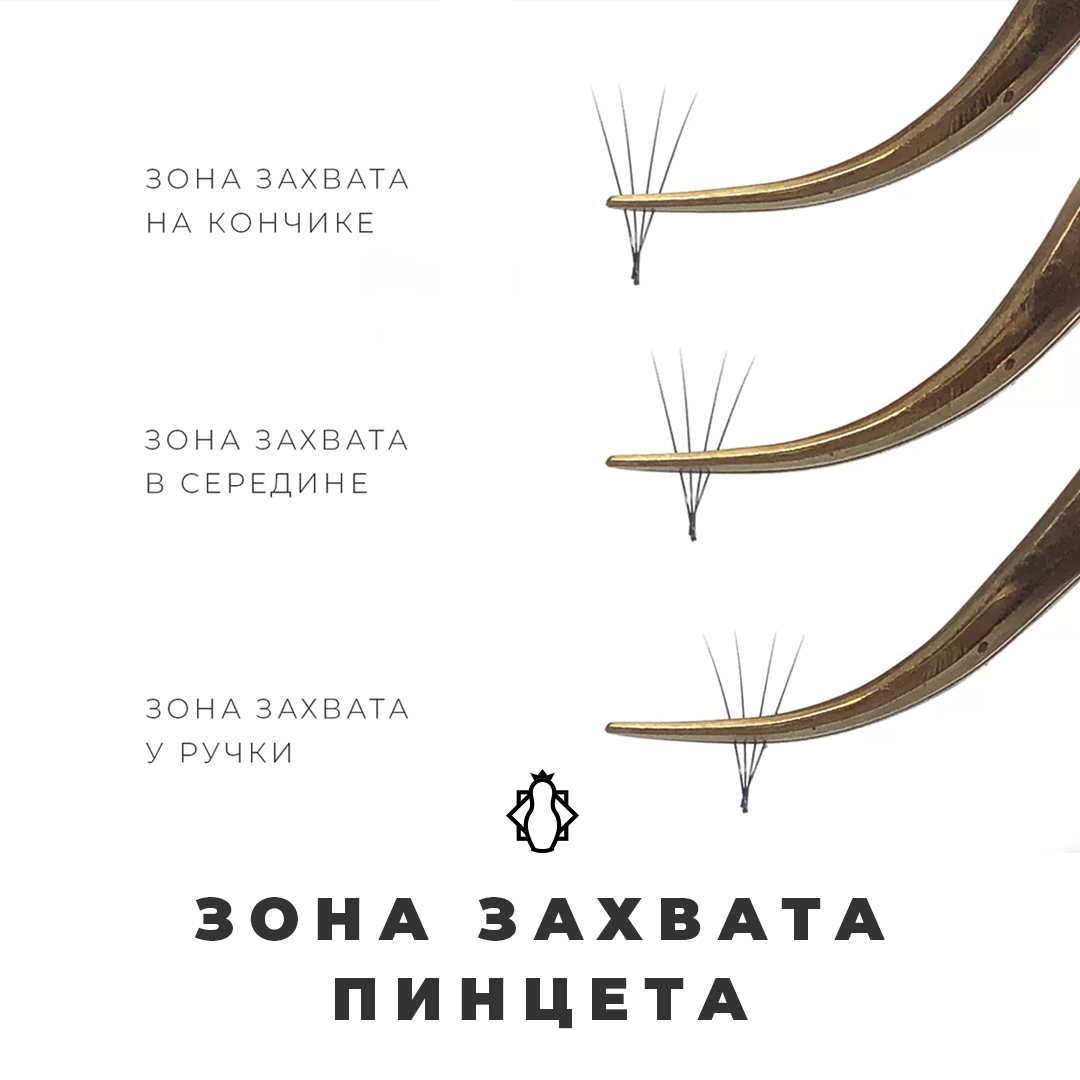
The grip zone (working zone)
The grip zone (working zone) can sit in different parts of the tips: near the point, in the middle, or closer to the handle. Every pair of tweezers is made by hand, so even tweezers of the same model, from the same brand and the same batch, can differ in where the working zone sits!
The tip closure
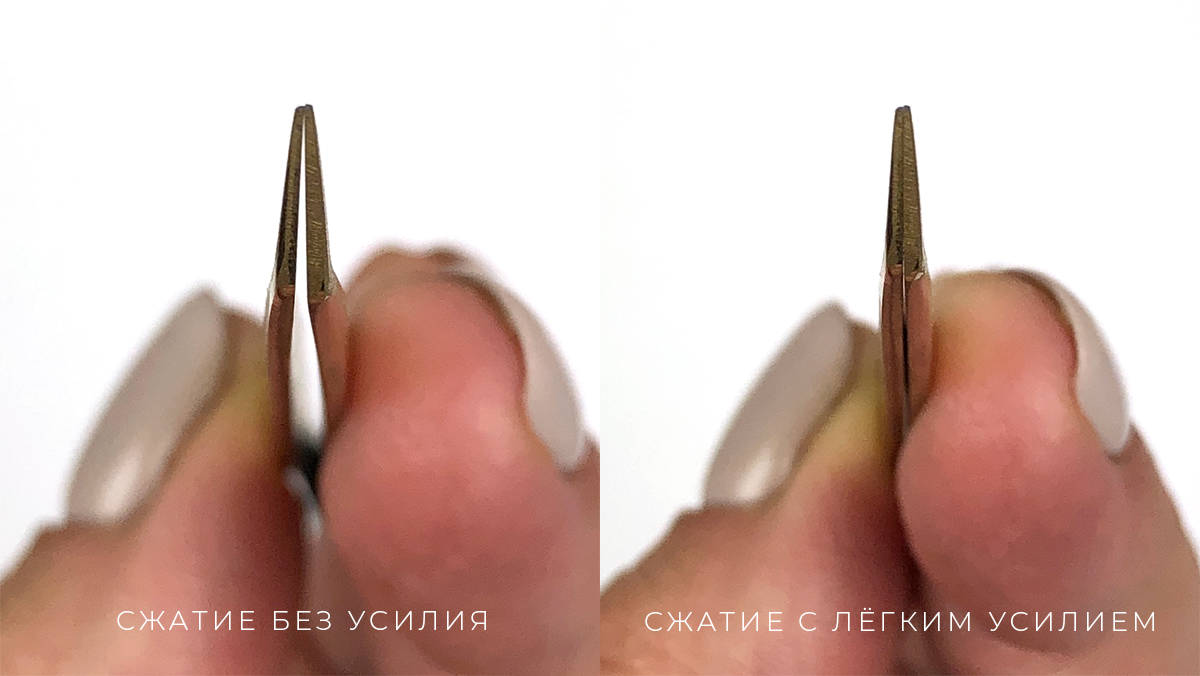
Tweezers from different makers can be made of different types of metal, which directly affects how much pressure you need to close them on a fan. The best option is tweezers made of high-quality Japanese steel, medium in softness and weight: they make for comfortable work. You “feel” and fully control the tool in your hand, yet you don’t have to press hard, and your hands don’t tire out.
That’s why, with light pressure, the tips may not meet along the whole surface, and with too much pressure they may splay slightly at the very point. This doesn’t affect how the tweezers work at all! The grip will still be precise, and the working zone wide enough to pick up the fans you need.
What’s the difference between classic and volume tweezers?
For classic, you can use almost any tweezers, since picking up one thicker lash is much easier than several thin ones.
The tricky part is choosing the perfect tweezers for volume. It all comes down to the grip zone: the wider it is, the more volume you can build.
Try them out! You’ll definitely find the one!
Types and shapes of lash tweezers
In their work, a lash artist uses 2 types of tweezers: the so-called straight and curved, though in reality there’s a huge variety of tweezer shapes.
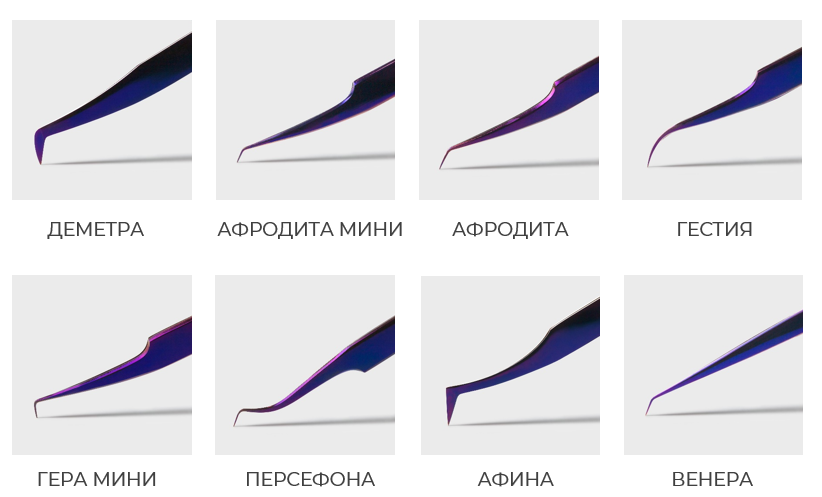
Training courses rarely give a full classification of tweezers. Did you know there are more than 20 shapes of curved tweezers used around the world?
There are no “good” or “bad” shapes, each artist picks the one that’s most comfortable for them. Try different options and go with the one that sits best in your hand!
The 3 main tip bends of lash tweezers
Examples of lash tweezer shapes
The tip bend
The tip thickness
The tip length
The handle length
The type of steel and its weight
There’s one parameter you can’t judge by eye, and it’s VERY important when choosing tweezers. That parameter is the type of steel the tweezers are made from. Right now, tweezer factories use the following materials:
- An alloy of various cheap metals
- Stainless / medical steel
- Anti-magnetic steel
- Japanese steel
- Titanium alloy
The type of steel affects a huge number of things: the tip closure and how much force you need to close it (if your hand goes numb from constantly picking up fans, think about getting tweezers made of a softer steel!), and its weight (also very important in your work).
And most importantly, it affects whether or not the tweezers can be sterilized, which health and sanitation standards require you to do in a dry-heat sterilizer before every application.
You might also like

How to Choose a Lash Curl

How to Make Lash Extensions Last Longer
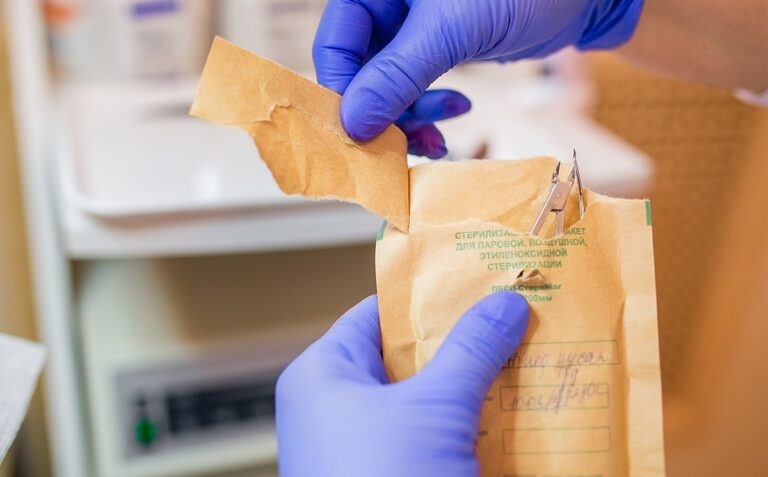
Disinfecting and Sterilizing Lash Tweezers
Your Client’s Eyelids Keep Twitching: What to Do?
How to Set Up Your Lash Workstation
The Wispy Lash Effect
The Best Surface for Your Adhesive Drop
How Often Should You Refresh the Adhesive Drop?
How to Choose the Best Lashes for Extensions
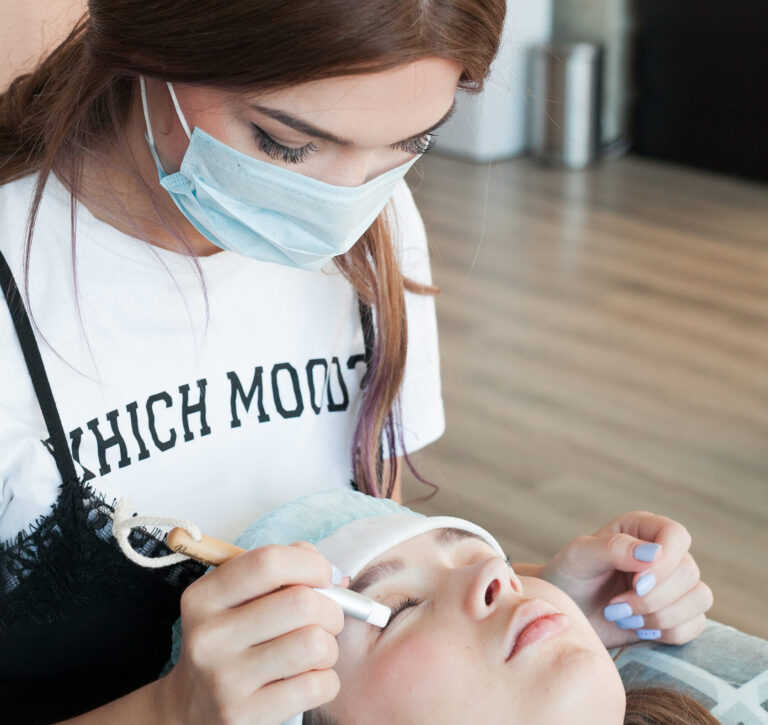
Prepping the Natural Lashes and the Extensions Before Application

7 Ways Lash Artists Can Protect Their Eyesight
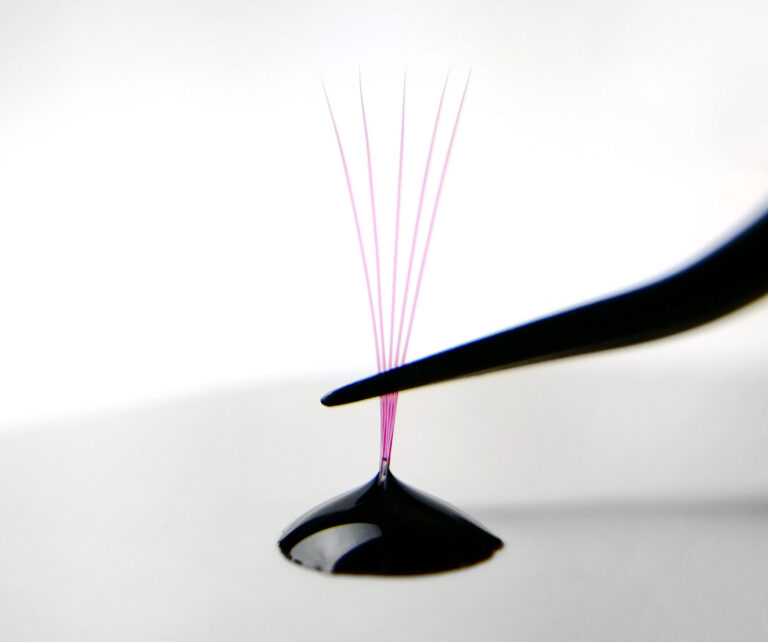
How Deep to Dip the Lash in Adhesive

Types of Lash Tweezer Sterilization Equipment

How to Choose the Volume
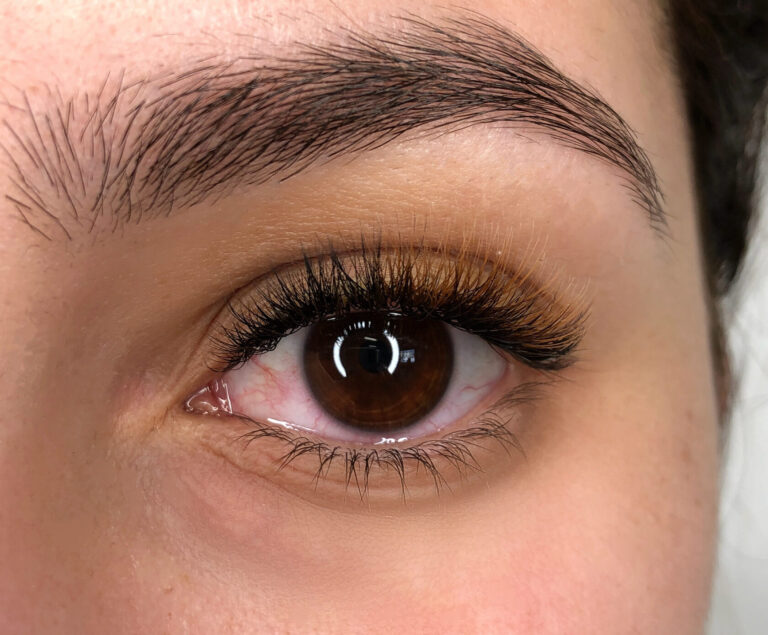
Why Do Eyes Get Red After Lash Extensions?
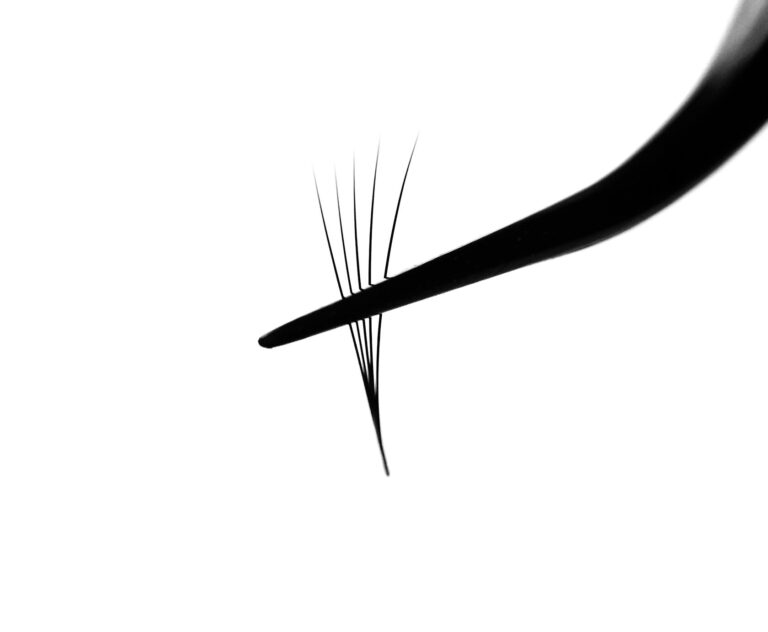
Why Volume Fans Fall Apart
How Lash Extensions Are Made, Step by Step
The Cat Eye Lash Effect
Why Do Lashes Tangle, Twist, or Droop?
Remover Balls Up Into White Clumps: What to Do?
Are Classic Lash Extensions Still Trending?
Lash Primer, Cleanser, Accelerator, and Bonder: When You Need Them and How to Choose

Online Lash Training: The Pros and Cons
Common Lash Extension Mistakes
Lash Extension Volumes Explained
Lash Extensions for Beginners: Where to Start and What You Need
Everything About Brown Lash Extensions
The Main Lash Extension Effects
The Squirrel Effect in Lash Extensions (Diagrams and Photos)