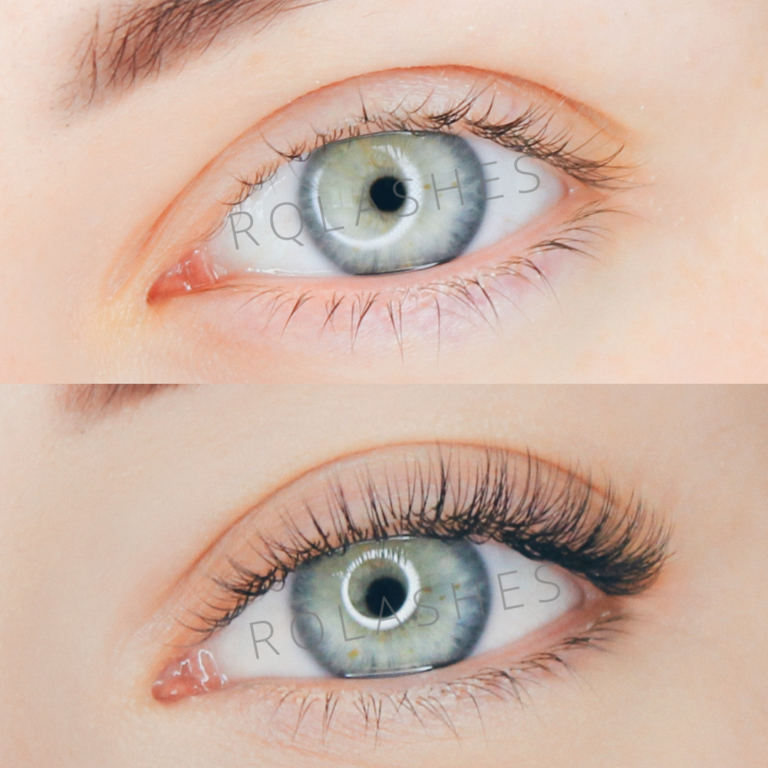
1. Each lash needs an “individual approach.” We never go by the direction of the natural lashes, since they can grow every which way. So you always have to find which side to place the extension or fan on to set the direction you want and get enough contact area.
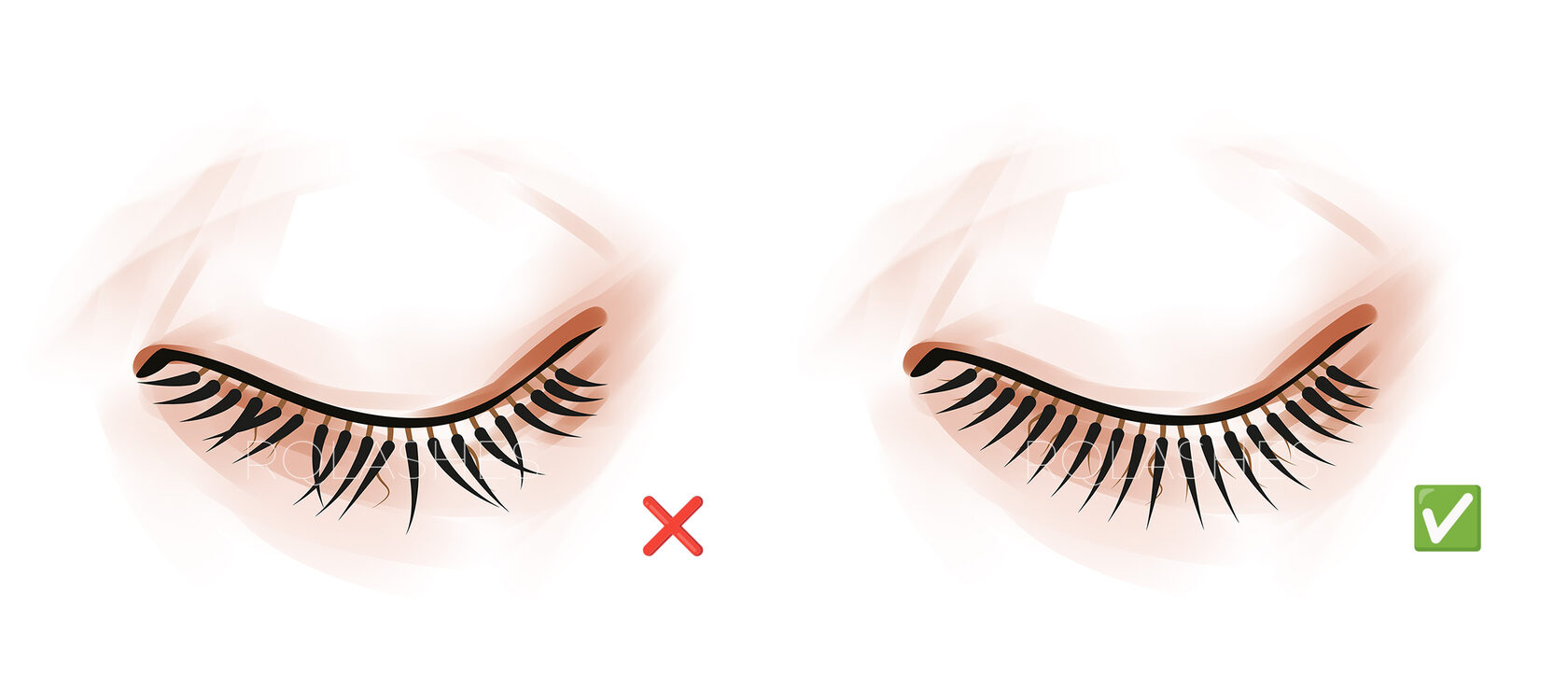
2. Set the direction gradually, increasing the angle little by little. Take your cue from the neighboring lash, all the lashes should run almost parallel to each other, like soldiers in formation, without crossing or fanning apart.
3. Pay attention to the direction of the TIPS! Lashes or fans can run parallel at the base but cross at the tips. The result: the direction still won’t look the way you want.
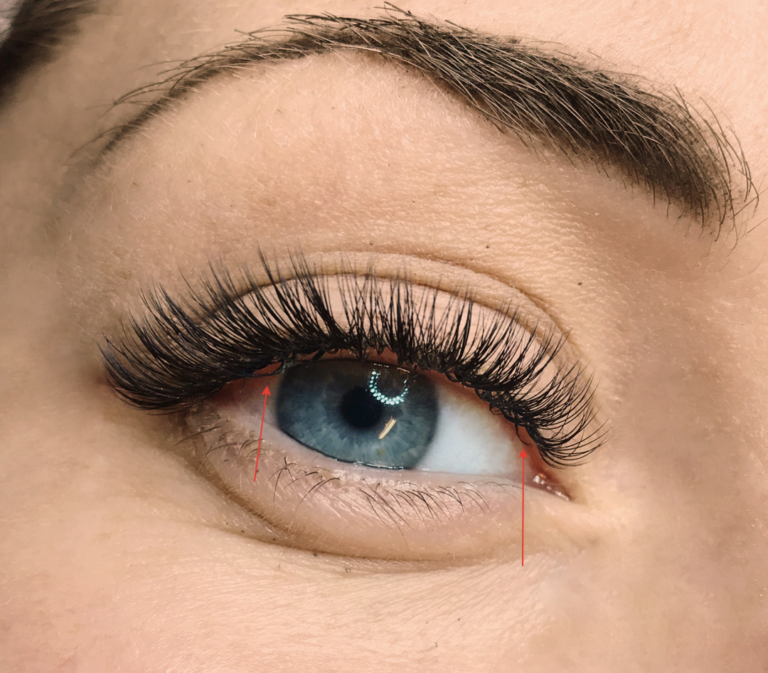
4. Use the mapping method. For many people, it’s much easier to set reference points that guide the direction of the whole set. (continued below)
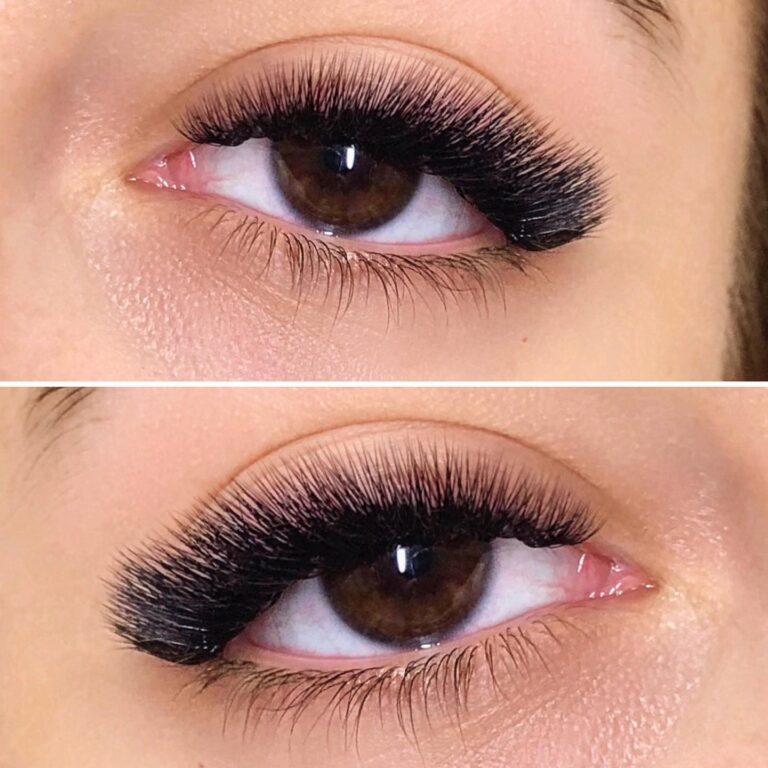
An example of direction in lash extensions
5. Work on the geometry of the fan. Fans should be as uniform as possible and not too wide, then the direction will be even too.
6. Let the lash dry. Don’t rush to the neighboring one: first, you’ll almost certainly get a sticky, and second, you can shift the direction of the freshly attached lash with your own tweezers, since the adhesive hasn’t dried enough yet to hold the fan.
7. Check that the margin is even everywhere. If the margin is inconsistent, the direction will be inconsistent too, no matter how hard you try.
8. Practice. Not just on clients, but at home too. You can take a sponge, line up a few individual extensions along the edge (one at a time), and try extending a lash or fan onto each one, setting the classic fanned direction. You can also use a strip of false lashes as your base.
Happy lashing!
Angling lashes toward the nose in the corners: yes or no?
Artists often wonder: can you angle the lashes toward the nose in the inner corner? What do you think?
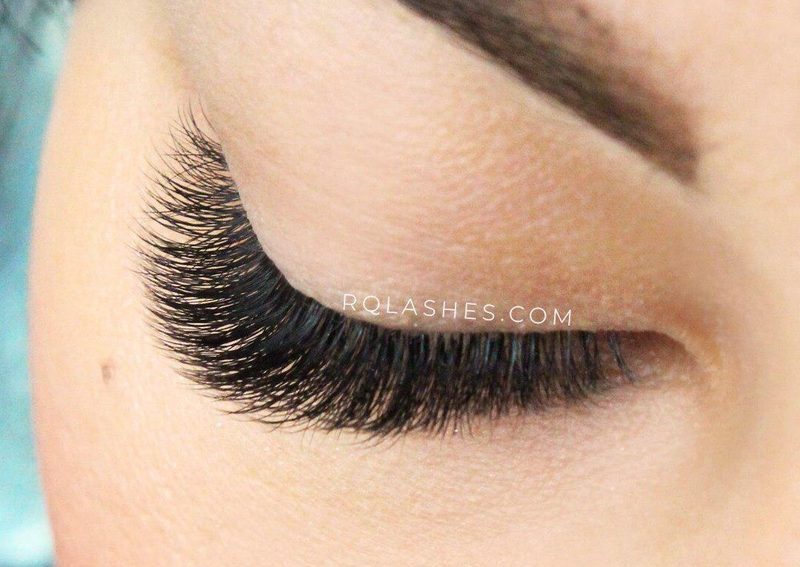
A lot of teachers say you can’t angle lashes toward the nose. Why? So far the main argument I’ve heard is that they’ll bother the client and catch on the skin. But here’s the thing!
We always take the shortest lashes for the inner corners, most often 5 mm and only in the softest B or C curl. At that length and curl, the lashes won’t touch the skin at all!
The inner corner is tricky to work in to begin with: the lashes there are thin and short, often vellus (baby) lashes, and they grow in every direction. They’re already hard to extend, and setting an even direction is harder still. This is where you just have to get the hang of it and find an “individual approach” to each one, meaning which side to place the extension or fan on so the direction ends up exactly how you want it, not how the natural lash happens to grow.
Of course, there are times when you shouldn’t angle the lashes toward the nose, for example, when the client has close-set eyes. In every other case, this direction visually elongates the eye! So there’s no reason to be afraid of angling lashes toward the nose.
Read also:
You might also like
How to Make Lash Extensions Last Longer

How to Choose the Best Lashes for Extensions

The Best Surface for Your Adhesive Drop
The Wispy Lash Effect
The Difference Between an Allergy and Irritation After Lash Extensions

Disinfecting and Sterilizing Lash Tweezers
Why Do Lashes Tangle, Twist, or Droop?
Lash Extensions for Beginners: Where to Start and What You Need
Lash Extension Volumes Explained
The Best Lash Adhesive: How to Choose
How to Set Up Your Lash Workstation
How to Choose a Lash Curl
Men’s lash extensions: how to define the eyes and keep them masculine
The Main Lash Extension Effects
Everything About Brown Lash Extensions

Why Your Client’s Eyes Water, and Why It Matters
Mistakes When Cleansing Lashes Before Application
The Cat Eye Lash Effect
How Lash Extensions Are Made, Step by Step
Remover Balls Up Into White Clumps: What to Do?

What Causes Allergies in Lash Extensions?

How to Tame Lash Extension Glue: Top Artists Secrets

Online Lash Training: The Pros and Cons
How Often Should You Refresh the Adhesive Drop?
The Squirrel Effect in Lash Extensions (Diagrams and Photos)
The Natural Lash Effect
Why Do Eyes Get Red After Lash Extensions?
Your Client’s Eyelids Keep Twitching: What to Do?
Under-Eye Pads for Lash Extensions